
Big Bass Bonanza RTP and Volatility Explained for UK Players
RTP and volatility are two of the most important ideas behind how Big Bass Bonanza feels in real play. They do not predict your next result, but they do help explain why the game can seem calm for stretches and then suddenly feel far more eventful.
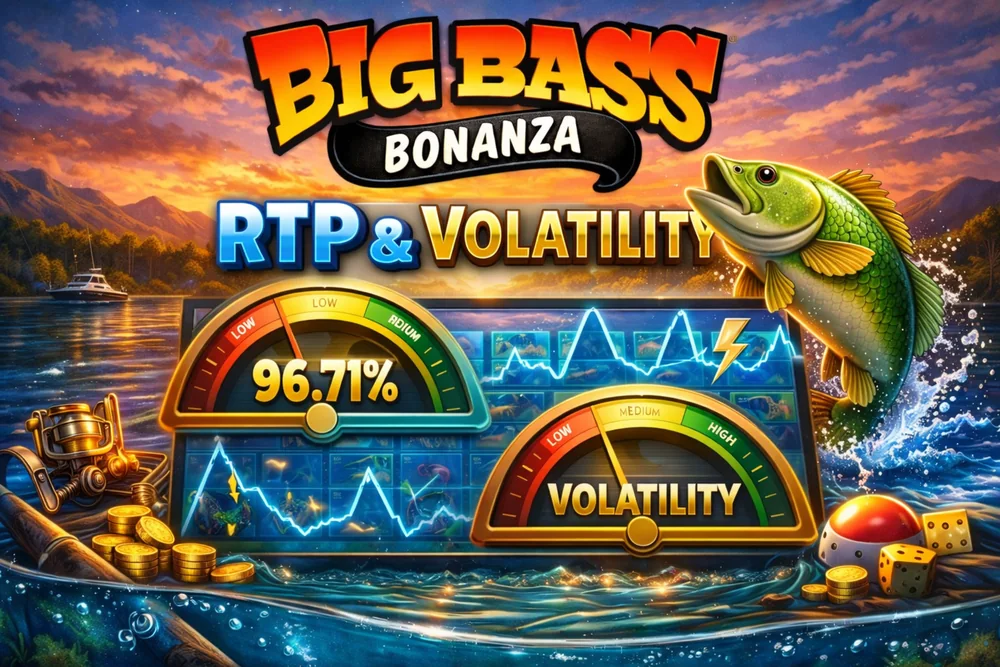
What RTP means in practice
RTP stands for return to player. It is usually shown as a long-term theoretical percentage rather than a promise for a single session. In simple terms, it is used to describe how much a slot is designed to return over a very large number of spins, not what one player will definitely get back on a given day.
For Big Bass Bonanza, many players look at RTP as a general reference point. It can help set expectations, but it should never be treated as a guarantee. A short session can still feel very different from the long-run average because randomness remains the core driver of outcomes.
What volatility tells you
- How steady or swingy the gameplay may feel over time
- Whether wins may come in smaller, more frequent patterns or in rarer spikes
- Why bankroll pressure can feel different from one slot to another
- Why patience matters more in some games than in others
- How pacing affects the emotional rhythm of a session
How RTP and volatility work together
RTP and volatility are related, but they do different jobs. RTP is about the long-run theoretical return. Volatility is more about the path the game may take on the way there. A game can have a familiar RTP figure but still feel far more intense than another slot because its payouts are distributed in a different way.
RTP focus
Useful for understanding the general mathematical profile of the slot over a very large sample of spins.
Volatility focus
Useful for understanding the likely rhythm of play, including quieter stretches and more dramatic swings.
What this can mean for Big Bass Bonanza sessions
Slower build-up
Some sessions may take time before they feel active. That can test patience, especially if you expect immediate momentum.
Uneven pacing
The game may not deliver a smooth line of small results. Instead, the rhythm can shift between quieter spells and more noticeable bursts.
Budget pressure
Volatility matters because it changes how long a bankroll may feel comfortable. Players who ignore this can misread short-term results.
This is why RTP and volatility should be read together. One helps explain the maths in broad terms. The other helps explain how those numbers can feel in real-world sessions.
How to use this information sensibly
- Set realistic expectations before starting a session
- Choose stake sizes that leave room for variance
- Do not chase a result because the RTP number looks attractive
- Use demo-style observation first if you want to understand the pacing
- Keep session length and spending limits clear before you begin
Common misunderstanding
A frequent mistake is assuming that a published RTP means a player is “due” to get close to that figure in a short session. That is not how it works. Short-term randomness can move far above or below the long-term model.
The smarter approach is to use RTP and volatility as expectation tools, not prediction tools. They help frame risk, but they do not remove it.
Read next
FAQ
Does RTP tell me what I will win today?
No. RTP is a theoretical long-term figure and does not predict the outcome of a short session.
Why does volatility matter in Big Bass Bonanza?
It helps explain how the game may feel in practice, including quieter stretches, sudden swings, and overall bankroll pressure.
Can two slots have similar RTP but feel very different?
Yes. Similar RTP figures can still produce very different experiences because volatility changes the rhythm and distribution of results.
Should RTP and volatility affect how I plan a session?
Yes. They can help you choose a sensible stake, set realistic expectations, and decide whether a slot matches your comfort level.
Use the numbers as context, not as promises
Big Bass Bonanza RTP and volatility can help you understand the slot’s general profile, but they are most useful when combined with sensible bankroll thinking and realistic expectations. The goal is not to predict a session exactly, but to understand the kind of risk and pacing you may be stepping into.